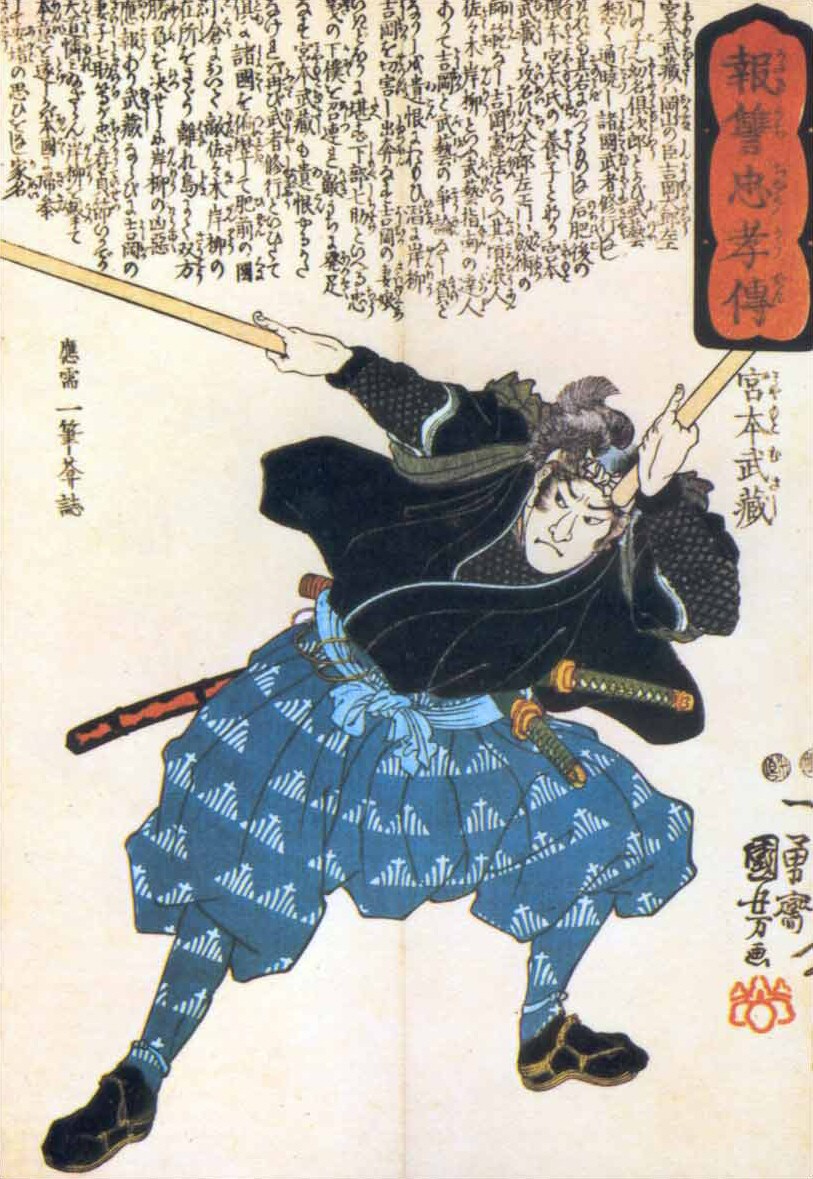
Musashi, Craftsmanship and The Critical Moment
Recently, I've been spending some time with books on
craftsmanship
The instance that triggered me into looking for and ultimately buying the reference was this video, in which USA Olympic Weightlifting coach Dave Spitz critiques another athlete and mentions one of The Book of Five Rings' most well known quotes — there are many possible translations for the phrase —:
To know one thing [well] is to know ten thousand.
Could Musashi not only be an entertaining Japanese character but also the or a foundation for craftsmanship?
Master craftsmanship back in Musashi's period had much in common with what we experience nowadays.
Firstly, there were good and bad practitioners everywhere. If you
think every samurai carried itself to Musashi-like standards, throw
your misconceptions away. The main reason for Musashi writing his
books was to rid the world of the disease of bad technique and bad
habit
Musashi was very pragmatic and completely averse to schools which
propagated complicated moves or secret techniques. He spends a lot of
his books' pages trying to convince you that they are actually trying
to trap you, by making you pay endlessly for whatever it is they
know
Second of all, Musashi did not think himself superior to others by being a samurai. According to him, [Japanese] society had many roles mandatory to its existence — namely: the samurai, the farmer, the artisan, and the merchant. What differentiated the samurai was the fact that it was an all or nothing occupation, it demanded everything from the individual and everything should be channeled at the critical moment of the fight.
Third, he does mention many parallels between his craft and others',
specially when it comes to carpentry. This might not have been the
case through his entire life, but, after his experience at designing
the township around the Akashi Castle in 1618, he explicitly starts to
make analogies with carpenters
The Way of combat strategy can be likened to the craft of carpentry.
Comparing samurai with carpenters is related to the subject of
“houses.” We speak of noble houses, warrior houses and the “Four
Houses.”
Everyone knows that craftsmanship has immense value, and, yet, we live
plagued by bad practices — I'm as guilty as anyone else. Maybe
we haven't emphasized it enough. And maybe Musashi can help us with
it. The main mark of a true master writer is exposing the importance
of what is obvious and, yet, neglected
Another very famous quote is the one featured in many Kendo dojos — despite the fact that they more often than not don't really follow any of Musashi's schools, which is actually quite the compliment —:
One thousand days of training to forge,
Ten thousand days of training to refine.
But a [Kendo] bout is decided in a split second.
The quote above, among other things, talks about the importance of putting everything you've got into the decisive split second that will decide the fight. Failing the split second critical moment is failing your entire life, thus putting your entire life's work in the trash can. Of course, this is a little bit of an exaggeration since we can salvage a lot even if you fail hard at the critical juncture, but how many times in your life have you failed at the critical moment and it felt like every second you spent training and studying went immediately up to smoke?
I wish I had emphasized this more in my life and I believe you wish so
too. Being an athlete of mostly endurance-based sports, this was
specially hard for me to grasp throughout the last 5 years of my life.
Initially, I was completely averse to the whole concept, as it seemed
completely opposite to everything my coaches had ever taught me: be
consistent, keep a constant pace and victory will come inevitably,
with patience. But perhaps endurance-based sports aren't, at the very
least not always, the best analogy for life
Another more usual example of how the critical moment emphasis could improve our performance is presentations and or lectures. It is not common for a class to have a background linear pace, which gives the impression that everything in it is of equal importance — or, perhaps, that nothings is important. But this isn't the case 99% of the time, is it? Every topic has usually 2 or 3 concepts accounting for the vast majority of its contents. Change the temporal pace when approaching these, spend more effort, give temporal emphasis to them, and watch comprehension and attention spike afterwards.
Some 4 years ago I had my first encounter with a close relative of
that Musashi quote in a probably unconscious analogy with Go and life.
In a tournament in London, I was fortunate enough to have my game
reviewed by Catalin Taranu 5p
A Go game is like life, there are a few critical instants in a sea of unimportant moments in-between.
What it was meant to teach is that, much like life, Go has moves or
moments in which the value of success or failure is way higher than
the average moment of the game. It is very important for us to
identify those moments and anticipate them so we can focus better and
channel everything we've got into them, the rest of the game might
suffer from our inevitable lack of energy, but that's well worth
it
In swordsmanship and in the midst of pitched battle, the ability to know the right moment to traverse a critical point is essential. Know the enemy’s strengths and have a firm grasp of your own capabilities.
One of the ways of improving your performance when the critical moment arises is by being conscious about it. It's easy to take the path of artificially making everything homogeneous and simply keep moving as usual. But, when the time comes, if you can, just stop, take a step back, breath consistently to lower the heart rate variance — no need for deep breaths actually: watch this lecture by Dr. Alan Watkins for more details — and, only then, make a move. In Go tournaments, from what I experienced throughout more than 5 years of playing and achieving dan levels, this would be revolutionary for almost every player if done right, even those much stronger than me.
For tasks in which you don't have the luxury of pausing, you will need
to find ways of training the switch from focus on the pace to focus
on bursts of extra effort. Create a test harness or laboratory for
your task or sport
Traverse the peril at the optimum point just as a worthy mariner navigates ocean routes. Once crossed, the mind becomes tranquil. If you successfully get past the critical point, your opponent will tire, the initiative will be yours and victory is there for the taking.
Another technique I've found to be very useful and have been recently experimenting with is one explored by performance coach Todd Herman: The Alter Ego Effect. As the Academy of Ideas explains in this video, the Alter Ego Effect tries to leverage a second ideal self for us to be able to achieve our goals without having to deal with our usual self-doubt and anxiety. By acting as our ideal self we can ditch our worries and commitments and only focus on the task at hand. This may appear silly at first but has had tremendous results with high performance athletes and is a de facto technique used and recommended by philosophers and psychologists.
In the end, this whole discussion on critical points could also be
seen as an application of a 4-dimensional perspective of life. We are
beings in 4 dimensions in fact, 3 spatial and 1 temporal. Why do we
put so much stress and importance on space and, so often, leave time
to a secondary role?
Be very mindful that a lot of Musashi's books' contents were lost throughout the ages and we will never know their true content, since they were, for a long time, only passed on from grandmaster to grandmaster, with various editions in-between. Hence, you should be very careful when choosing a translation and source for the text.
I ultimately chose to go for
Alexander Bennett's version of the text, someone who has spent decades in Japan mainly focusing on
Kendo
Takashi is supposedly the world's foremost expert on Musashi and has
done probably the most scientific work on the topic. After years
looking for the original manuscripts and not finding any confirmation
of their existence, he has taken all of the most trustworthy copies
and interpolated them in order to find their mistakes and, hopefully,
uncover the original text from cross-checking all of the various
posterior editions
As a bonus for Bennett's book, you also get the other Musashi books, with meta-references to their counterparts in the main Book of Five Rings.
This review offers a valuable counterpoint to Bennett's translation, some that I will probably never be able to attest, since I don't know any Japanese.
Despite Musashi's works being amazing and perhaps mandatory for any proud craftsman, I would say they are outdated and insufficient. Times and technologies have changed a lot and the context of swordsmanship isn't that generic sometimes.
The way the book is written also doesn't help very much. It's overall superficial and so fragmented that changing the context takes most of your concentration time. Besides all that, it is trying to do something very difficult to achieve: explain martial arts in words. It wasn't meant to be a textbook for beginners but rather for experts, so that's a concession we have to make.
One of Musashi's books that is sometimes forgotten is actually a very iconic one: Dokkodo or The Path Walked Alone. In it, at his deathbed, he listed 21 principles to live your life by. Some of the more unusual ones are:
-
I harbored no biased feelings.
- One of the instances in which this comes into play is when discussing preferences for different techniques. A big part of Musashi's school is to not have preferences, your moves should be dictated by the circumstances only; those who blindly follow the way of the long sword only will be killed in closed quarters; and, conversely, those who follow the way of the short sword only will die by the spear.
-
I steered clear of the path to attachment.
- Attachment in this context, according to Bennett, means falling in love, which is a considerable deviation from the more usual Romantic love or Ancient Greek love in Western societies. An interesting fact is that there are no historical records about Musashi having a partner at all, not even casual intercourse with prostitutes.
-
I cared not where I lived.
- As a samurai, he was basically a nomad, serving different lords throughout his life. But this was not an annoyance or burden to him, it actually made him more free as an individual. As many Cynic philosophers of Ancient Greece and the Roman Empire would have converged: having too many possessions is actually being the one possessed by.
Before you leave, I hope I have convinced you enough to join the unofficial Ridding the World of Bad Practices Club. We have quite some high-caliber members and we are always open to criticism. Personally, my life's purpose depends on this membership, and I think society could benefit a lot from us having more members.
Read about efficiency. That's what Musashi's book is ultimately about when generalized to other crafts. His work was an attempt at cleaning up all of the dirt and bad habits left throughout the ages, only leaving the bare minimum which we need to learn in order to achieve our goals in the most efficient manner.
Many books will be specific to whatever area you're interested in, but there are those which can be applied to any area of interest; some that come to mind are:
- Coherence: The Secret Science of Brillian Leadership, by coach and neuroscientist Dr. Alan Watkins.
- Never Split The Difference, by former FBI Hostage Negotiator and Instructor Chris Voss.
- Effective Notetaking, by Fiona McPherson, PhD.
- The Alter Ego Effect, by performance coach Todd Herman.
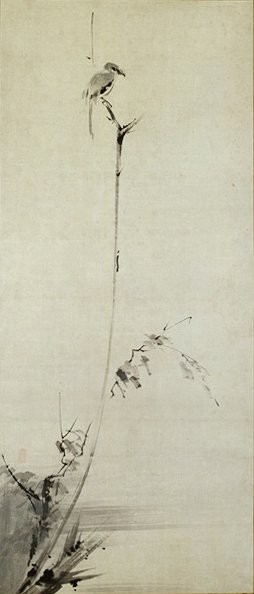
Musashi also believed that the samurai was two-fold — the pen and the sword — and, so, he also managed to be a master painter and calligrapher. You can read more about it in The Art of Miyamoto Musashi, by Brian Campbell, on Medium.